
What Is Kinesiology Tape?
Kinesiology Tape is an elastic adhesive strip used on the skin to provide light support and sensory input during movement. The tape follows the body’s contours and may help you notice joint position or muscle activity. It does not stabilize an injured area like a rigid brace or repair damaged tissue.
Quick Facts About Kinesiology Tape
Category
Elastic therapeutic tape
Used for
Movement support and body awareness
Common confusion
Not a rigid brace or injury repair
Also called
Elastic Therapeutic Tape, K-Tape
Often discussed with
Sports Injury Treatment
Key Takeaways About Kinesiology Tape
- Elastic material distinguishes kinesiology tape from rigid athletic tape.
- Skin preparation and placement affect comfort and adhesion.
- Kinesiology tape is not the same as a brace.
How Kinesiology Tape Works

Kinesiology Tape stretches with normal body movement and returns toward its original shape after placement. Its gentle pull across the skin can provide sensory feedback about movement and position. That feedback may help you stay aware of how an area moves during activity.
Related glossary terms: Sprain, Strain, Range Of Motion.
Application depends on the body area, the person’s movement pattern, and the purpose of the tape. A clinician checks the skin, chooses a direction, and applies the strip without restricting normal motion. Sports Injury Treatment may include tape as one part of a broader plan for an active person recovering from a strain or sprain. The tape should remain comfortable and should not replace an assessment of the underlying problem.
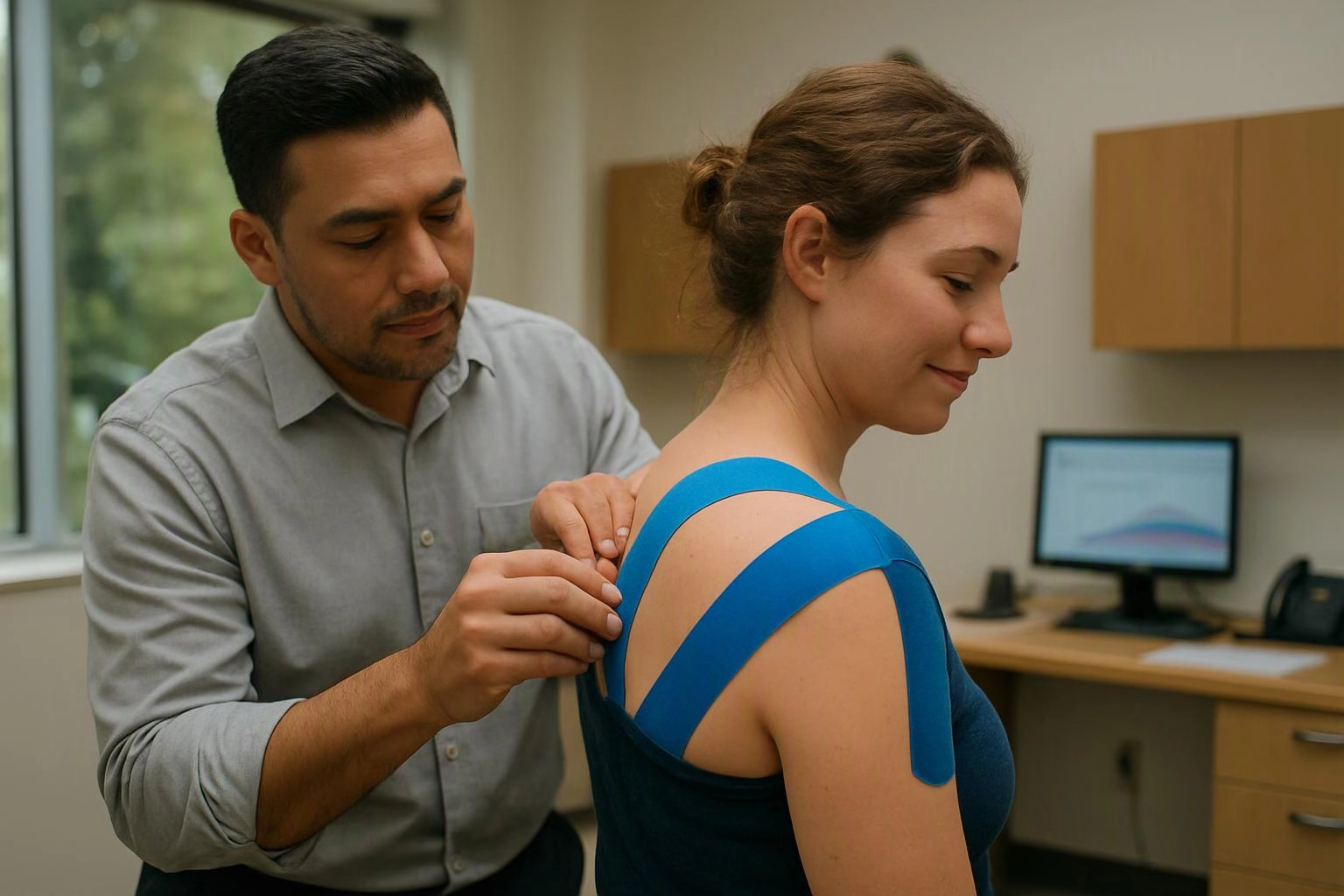
From the Arrowhead Clinic Chiropractor Riverdale team
When we use kinesiology tape, we first consider the injury, movement pattern, skin condition, and activity demands. We check the tape’s placement and the person’s response during movement. Our team treats the tape as a supportive tool within Sports Injury Treatment, not as a substitute for clinical evaluation.
Kinesiology Tape in Practice: A Real-World Example
A recreational runner with a mild calf strain may receive kinesiology tape before returning to activity. The tape can provide movement feedback while the clinician monitors comfort, walking, and the demands of the sport.
Related Services
Related Terms
Sprain
A sprain is an injury to a ligament, the tough tissue that connects bones at a…
Strain
Strain is an injury to a muscle or tendon caused when the tissue is stretched beyond…
Range Of Motion
Range Of Motion is the available movement at a joint or body region during a specific…
Gait Analysis
Gait Analysis is the structured observation of how you walk or run. The assessment examines foot…
Arrowhead Clinic Chiropractor Riverdale
Have Questions About Kinesiology Tape?
Contact Arrowhead Clinic Chiropractor Riverdale for practical guidance on Kinesiology Tape and related chiropractor work in Riverdale.