
What Is a Muscle Spasm?
Muscle Spasm is a sudden, involuntary tightening of muscle tissue that may feel hard, painful, or difficult to relax. The tightening can affect a small area, such as a neck muscle, or a larger region, such as the lower back. Muscle spasms may occur with strain, irritation, fatigue, or changes in movement patterns.
Quick Facts About Muscle Spasm
Category
Muscle response
Used for
Describing involuntary muscle tightening
Common confusion
Often confused with a trigger point
Also called
Muscle Cramp, Muscle contraction
Often discussed with
Chronic Pain Treatment
Key Takeaways About Muscle Spasm
- The muscle tightens without conscious control.
- Pain and restricted movement may accompany the tightening.
- A spasm is not the same as a trigger point.
How Muscle Spasm Works
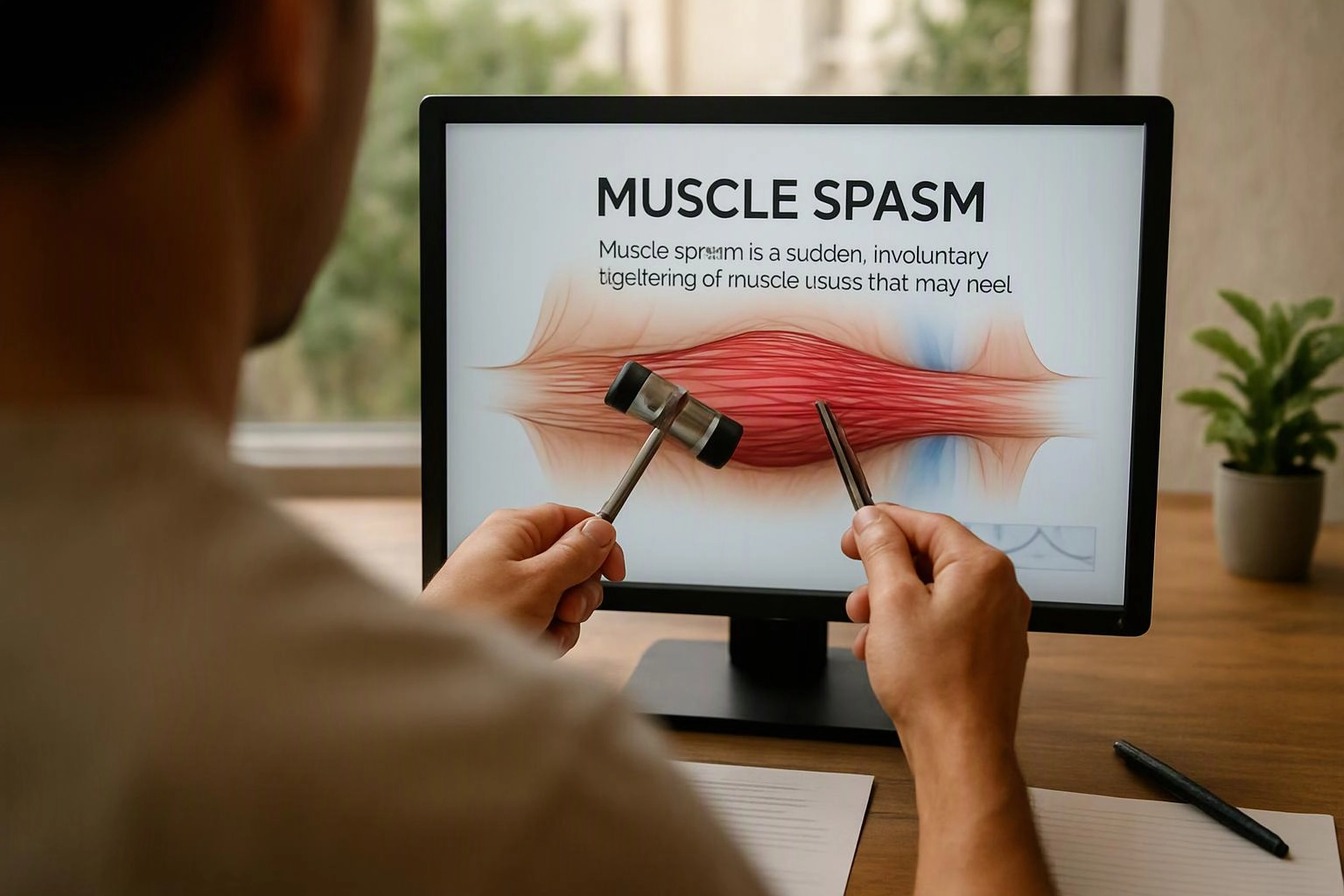
Muscle spasm works through an involuntary contraction that keeps muscle fibers active when the body would normally allow them to relax. The affected area may feel firm or guarded, and nearby movement can become uncomfortable. The experience can vary based on the involved muscle and the activity that preceded it.
Related glossary terms: Trigger Point, Strain, Myofascial Release.
A clinician considers the location, tenderness, movement limits, and pattern of symptoms when assessing a spasm. A trigger point is a focused tender area within a muscle, while a spasm describes the active tightening response. During chronic pain treatment, this distinction helps connect muscle findings with posture, joint motion, and daily activities.
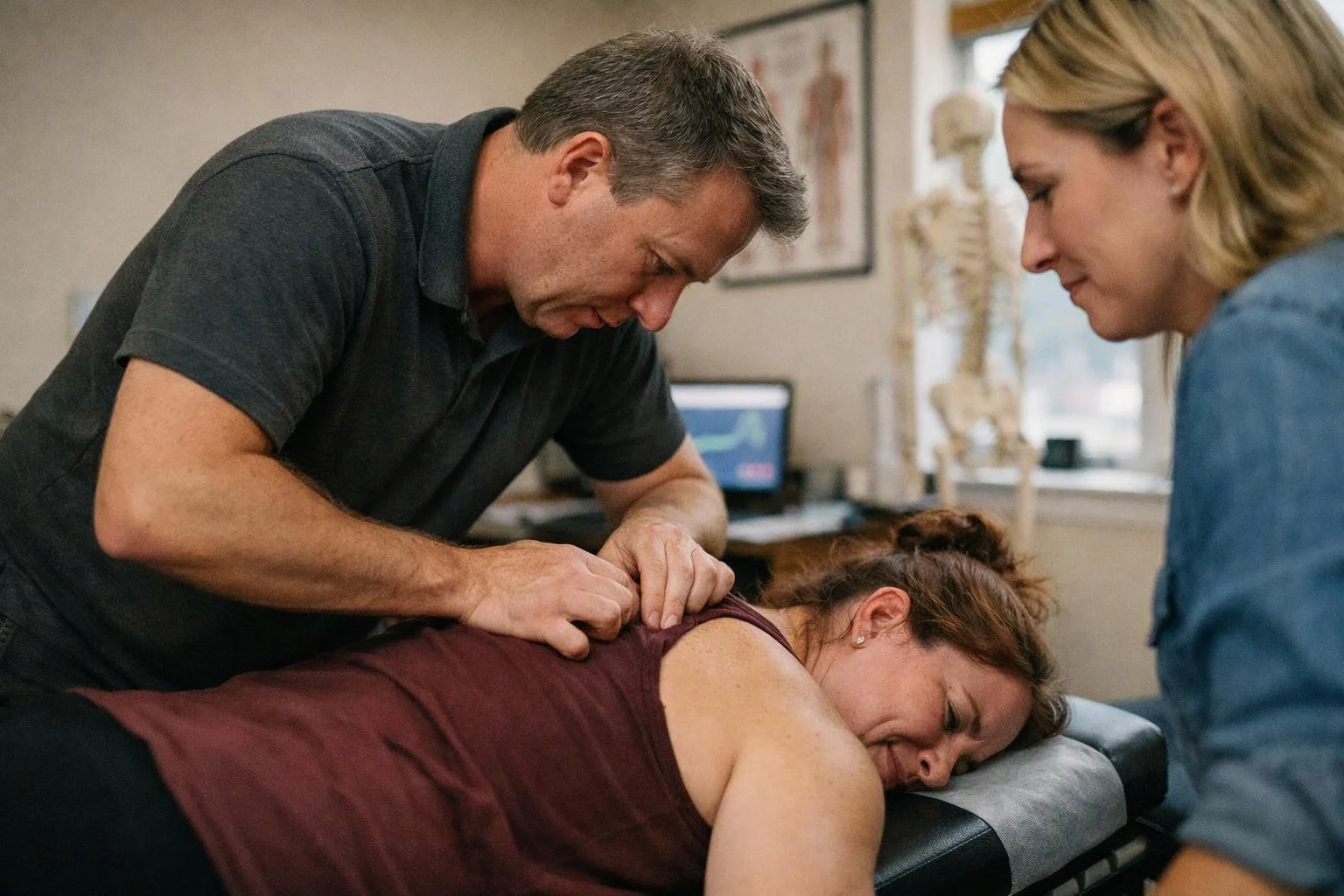
From the Arrowhead Clinic Chiropractor Riverdale team
When we assess a muscle spasm, we review the area of tightening, the person’s movement, and related tenderness. We also consider whether nearby joints, posture, or repeated activity may contribute to the muscle response. Our team records these findings as part of a broader chronic pain treatment assessment.
Muscle Spasm in Practice: A Real-World Example
A person with chronic low back pain may feel the muscles tighten after sitting in one position or changing activity. The tight area can make bending or turning feel restricted during ordinary movement.
Related Services
Related Terms
Trigger Point
A Trigger Point is a sensitive, tight area within muscle tissue that may produce local tenderness…
Strain
Strain is an injury to a muscle or tendon caused when the tissue is stretched beyond…
Myofascial Release
Myofascial Release is a hands-on massage technique that applies sustained, focused pressure to restricted areas in…
Range Of Motion
Range Of Motion is the available movement at a joint or body region during a specific…
Arrowhead Clinic Chiropractor Riverdale
Have Questions About Muscle Spasm?
Contact Arrowhead Clinic Chiropractor Riverdale for practical guidance on Muscle Spasm and related chiropractor work in Riverdale.