Understanding Cervical Spine

The cervical spine is the top section of the human spine, starting just below the skull and ending at the upper back. It contains seven small bones called vertebrae, stacked on top of each other. These vertebrae are labeled C1 through C7, with C1 (also called the atlas) sitting directly under the skull and C7 connecting to the thoracic spine below. The cervical spine is designed to be both strong and flexible, allowing the head to move in multiple directions while protecting the spinal cord and nerves that pass through it.
Unlike the larger vertebrae in the lower back, the cervical vertebrae are smaller and more mobile. This mobility is essential for everyday actions like looking over your shoulder, tilting your head to hear better. Or nodding in conversation. But this flexibility also makes the cervical spine more vulnerable to injury from sudden movements, poor posture. Or trauma, such as whiplash from a car accident. The spinal cord and nerves branching from the cervical spine control sensation and movement in the arms, hands, shoulders. And parts of the upper back, which is why problems here can lead to symptoms far from the neck itself.
How the Cervical Spine Works?
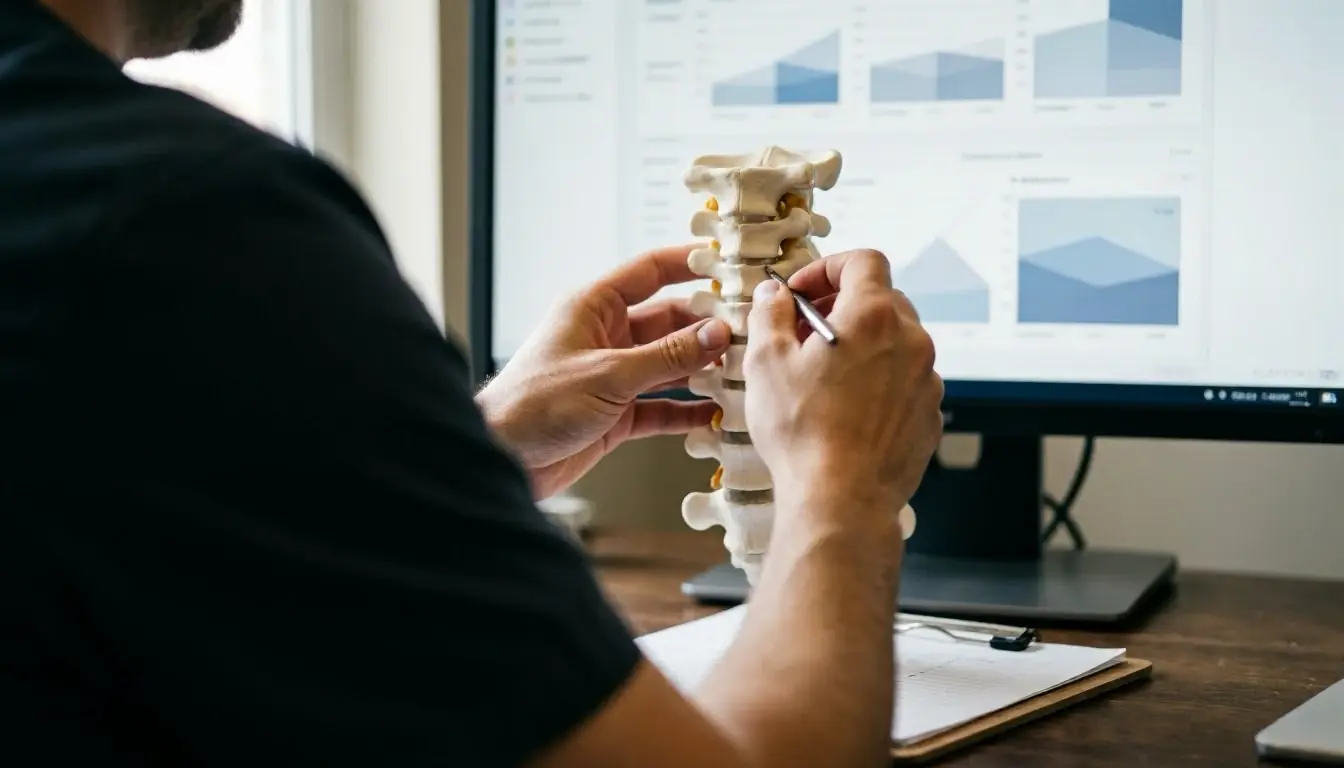
The cervical spine functions like a flexible tower of support. Each vertebra has a bony ring that surrounds and protects the spinal cord, with openings on the sides where nerves exit to reach the arms and upper body. Between each vertebra are intervertebral discs—soft, gel-like cushions that act as shock absorbers and allow the bones to move smoothly against each other. These discs prevent the vertebrae from grinding together and help distribute the weight of the head evenly.
The first two vertebrae, C1 and C2, have unique shapes that enable most of the neck’s rotation. C1. Or the atlas, cradles the skull and allows nodding motions. While C2. Or the axis, has a small bony projection that C1 pivots around, enabling side-to-side head turns. The remaining vertebrae (C3 to C7) have a more typical shape, with small joints on the sides that guide movement and prevent excessive twisting or bending. Muscles and ligaments attach to these vertebrae, providing stability and controlling motion. When these structures work together properly, the cervical spine supports the head’s weight—about 10 to 12 pounds—while allowing a wide range of movement without pain or restriction.
Why the Cervical Spine Matters?
The cervical spine plays a critical role in daily life, far beyond just holding up the head. Because it houses the spinal cord and nerves that connect to the arms, hands. And upper body, any disruption in this area can affect strength, sensation. And coordination. For example, a pinched nerve in the cervical spine can cause tingling, numbness. Or weakness in the fingers, making tasks like typing, gripping objects. Or even holding a cup difficult. Chronic neck pain, often linked to cervical spine issues, is a leading cause of missed workdays and reduced quality of life, affecting millions of people each year.
Beyond physical discomfort, the cervical spine’s health can influence other parts of the body. Poor posture, such as slouching or craning the neck forward while using a phone, can strain the cervical spine and lead to headaches, jaw pain. Or even balance problems. In more severe cases, trauma to the cervical spine - like from a car accident or sports injury, can result in serious conditions like herniated discs or spinal cord compression, which may require medical intervention. Maintaining the health of the cervical spine through proper posture, regular movement. And professional care can help prevent these issues and keep the upper body functioning smoothly.
When Cervical Spine Matters Most?
The cervical spine becomes especially important in situations where movement, safety. Or nerve function is at risk. For example, after a car accident, even a minor collision can cause whiplash - a sudden jerking motion that strains the neck’s muscles, ligaments. And vertebrae. Symptoms like stiffness, headaches. Or arm numbness may not appear immediately, which is why many healthcare providers recommend an evaluation of the cervical spine following any trauma. Similarly, people who work long hours at a desk or frequently use handheld devices may develop chronic neck pain or stiffness due to prolonged forward head posture, which places extra stress on the cervical spine.
Certain medical conditions also highlight the importance of the cervical spine. Conditions like cervical radiculopathy (a pinched nerve), osteoarthritis (wear-and-tear arthritis in the neck). Or disc herniations can cause pain, weakness. Or numbness that radiates into the shoulders and arms. Athletes, particularly those in contact sports or activities requiring repetitive neck motion (like swimming or gymnastics), are at higher risk for cervical spine injuries and may need specialized care to maintain performance and prevent long-term damage. Regular check-ups with a chiropractor or other spine specialist can help identify early signs of cervical spine problems before they worsen.