Glossary

What is Scoliosis?

Scoliosis is a sideways curvature of the spine that often appears during growth spurts just before puberty. Scoliosis can be mild, moderate. Or severe. And may cause uneven shoulders, waist. Or hips. While most cases are mild, severe scoliosis can lead to breathing difficulties or chronic back pain if left untreated.

Reviewed by Dr. Harry W. Brown, D.C.Sources reviewed: American Association of Neurological Surgeons, National Scoliosis Foundation

Quick Facts About Scoliosis

Category

Spinal condition

Used for

Monitoring and correcting spinal curvature

Common confusion

Often mistaken for poor posture rather than a spinal deformity

Also called

Spinal curvature, Curved spine

Often discussed with

Chiropractic Consultation and Diagnosis

Key Takeaways About Scoliosis

Understanding Scoliosis
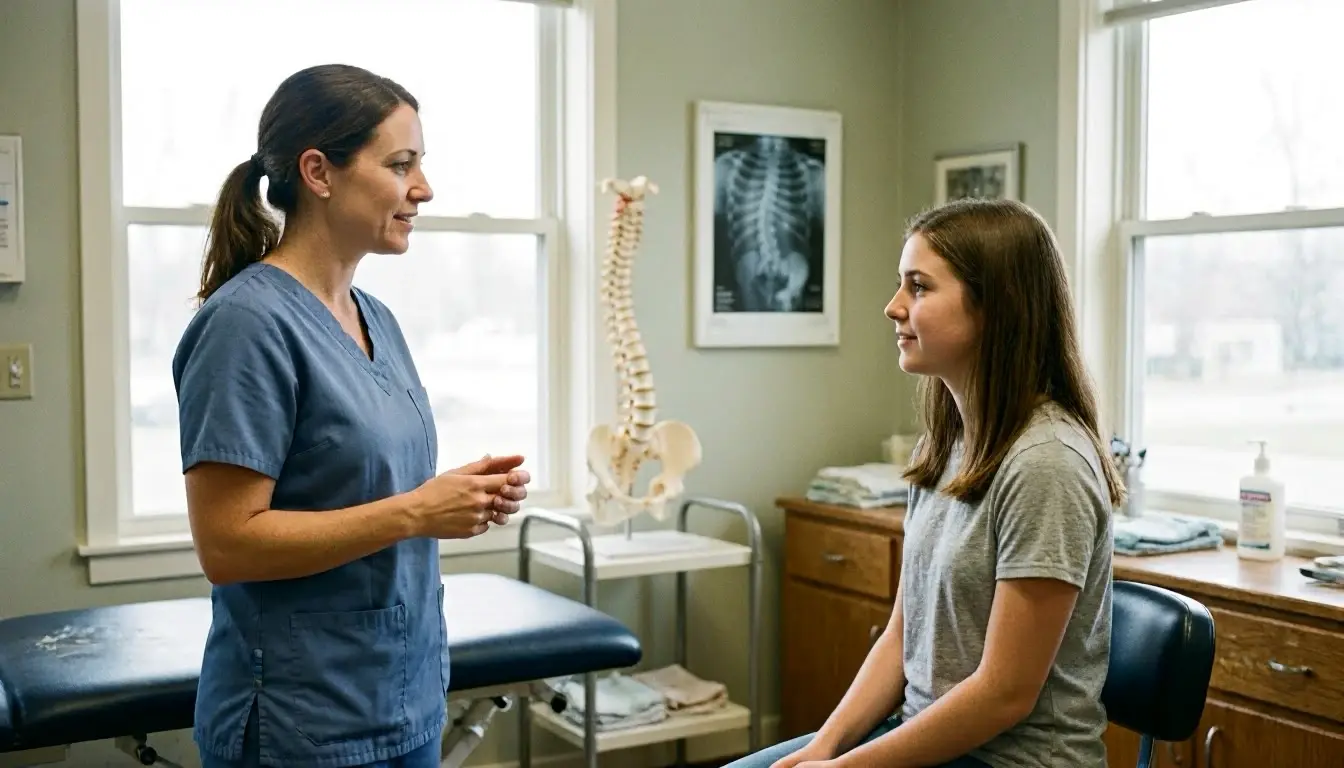
Scoliosis in Chiropractor—Riverdale

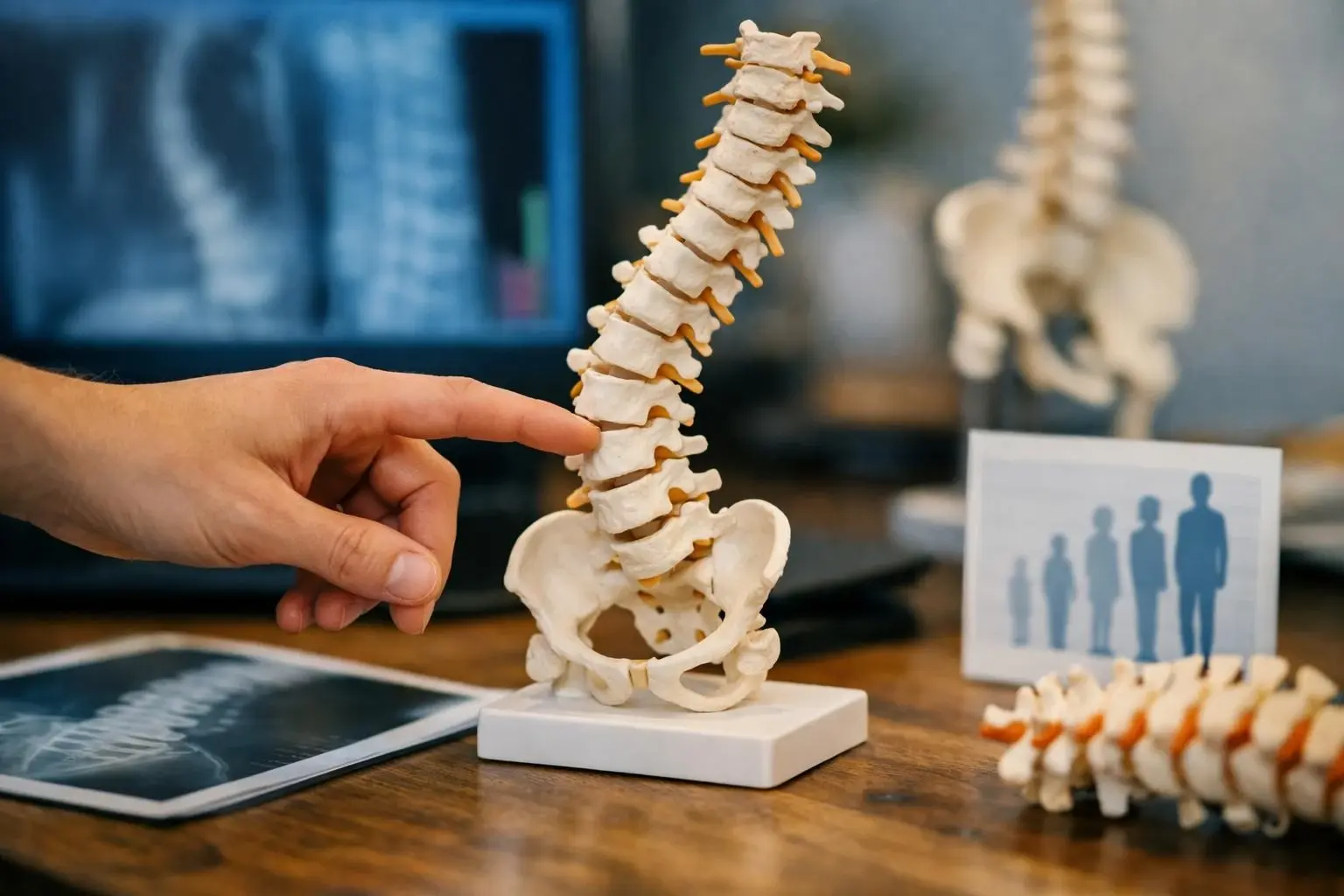
Scoliosis makes the spine curve sideways. It looks like a C or S shape. The spine should be straight.

Related glossary terms: Spinal Alignment, Back Pain, Physical Rehabilitation.

This can happen at any age. Most cases are found in kids and teens. They get it during growth spurts.

The curve can be mild or severe. How bad it is decides the treatment. Most causes are not known.

Sometimes it comes from other health problems. These include cerebral palsy (a muscle control issue). They also include muscular dystrophy (weak muscles). Or birth defects of the spine.

How Scoliosis Is Measured?

Many cases are mild. They don’t cause pain. But the curve can get worse over time.

This can change how a person stands. One shoulder may look higher. One hip may stick out. Ribs may bulge on one side.

These signs mean a doctor should check. Finding it early is key. Severe cases can hurt lungs or cause pain.

It can also lead to other health problems. These happen later in life.

Why Scoliosis Matters?

Doctors check scoliosis with a simple test. The patient bends forward. The doctor looks for uneven ribs or spine.

If they see a curve, they take an X-ray. This confirms the curve. It also measures how bad it is.

The Cobb angle (a way to measure curves) tells how severe it is. Curves under 10 degrees are normal. Curves from 10 to 25 degrees are mild.

Curves from 25 to 40 degrees are moderate. Curves over 40 degrees are severe.

Kids and teens need regular checks. Their spines are still growing. Mild curves may not need treatment.

But they should be checked every 4 to 6 months. This makes sure they don’t get worse. Moderate curves may need a brace.

The brace stops the curve from getting worse. Severe curves may need surgery. Surgery straightens and stabilizes the spine.

The goal is to stop the curve. This keeps the spine working well.

When Scoliosis Matters Most?

Scoliosis can affect health and daily life. Even mild cases can make kids feel self-conscious.

Teens may worry about how they look. This can cause emotional or social issues. Moderate to severe cases can cause back pain.

The spine and muscles get strained. This can make people tired. Severe curves can press on lungs or heart.

This makes breathing or moving hard. Scoliosis can affect daily tasks. It can make sports or hobbies tough.

People with severe scoliosis may struggle to sit or stand long. This can affect school, work. Or fun. Early help can manage symptoms.

It can improve posture. It can stop the curve from getting worse. This helps people stay active and happy.

%%SEO_CRITICAL_FRAGMENT_4%%

Scoliosis matters most during fast growth. This happens in childhood and teen years. The spine is more likely to curve then.

Parents, teachers. And coaches should watch for signs. Uneven shoulders are a clue. A shoulder blade may stick out.

The waistline may look uneven. Kids ages 10 to 15 need extra checks. School screenings can help find it early.

But regular doctor visits are also key. Scoliosis can cause pain or limit movement. It can also affect organs.

Adults may have back pain. They may feel nerve pressure. They may struggle with physical tasks.

Treatment can help. Options include therapy, chiropractic care. Or surgery. These improve comfort and movement.

For families in Riverdale, GA, knowing about scoliosis helps. It lets them get the right care. This supports managing the condition well.

How to Evaluate Scoliosis?

Related Concepts Compared

Scoliosis vs. Kyphosis

Kyphosis is an excessive forward rounding of the upper back. While scoliosis is a sideways curve of the spine.

Scoliosis vs. Lordosis

Lordosis is an inward curve of the lower back, often called swayback, unlike scoliosis’s sideways curve.

Expert Note

Scoliosis is not caused by carrying heavy backpacks, poor posture. Or sports activities. Though these factors can sometimes worsen existing symptoms. Early screening and regular monitoring are key to managing progression.

Common Mistakes or Myths About Scoliosis

  • Assuming scoliosis is always painful—many mild cases cause no discomfort.
  • Believing scoliosis is caused by poor posture or heavy backpacks.
  • Ignoring early signs like uneven shoulders or hips, thinking they will resolve on their own.
  • Assuming braces or surgery are always needed—many cases only require monitoring.

Scoliosis in Practice: A Real-World Example

A 12-year-old girl notices her right shoulder appears higher than her left. Her pediatrician performs an Adam’s Forward Bend Test and orders an X-ray, which confirms a 20-degree spinal curve. Her doctor recommends regular check-ups every 6 months to monitor the curve as she grows.

Related Services

Related Terms

Spinal Alignment

Spinal Alignment is the precise positioning of the vertebrae in the spine to maintain its natural curves and optimal function. Proper alignment ensures nerves, muscles. And joints work together without strain, reducing pain and improving mobility. Misalignment can result from injury, poor posture.

Back Pain

Back Pain is discomfort or pain felt anywhere along the spine, from the neck down to the lower back. It can range from a dull ache to sharp, debilitating pain and may be caused by muscle strain, injury, poor posture. Or underlying medical conditions. Back Pain affects daily activities and may limit movement, making it one of the most common reasons people seek medical care.

Physical Rehabilitation

Physical Rehabilitation is a structured, health-focused process that helps individuals regain strength, mobility. And function after injury, surgery. Or illness. It combines exercises, manual therapies. And education to restore daily activities, reduce pain. And prevent future problems. Licensed professionals design personalized plans to meet each person’s specific recovery goals.

Chiropractic Care

Chiropractic Care is a health care profession focused on diagnosing and treating musculoskeletal disorders, particularly those related to the spine. Chiropractors use hands-on spinal manipulation and other alternative treatments to align the body’s musculoskeletal structure, enabling the body to heal itself without surgery or medication. Treatment often emphasizes improving joint mobility and reducing pain.

Joint Dysfunction

Joint Dysfunction is a condition where a joint in the body doesn't move, align. Or function properly. It often causes pain, stiffness. Or reduced range of motion and may result from injury, overuse, poor posture. Or underlying health issues. Chiropractors and other healthcare providers assess and treat joint dysfunction to restore normal movement and relieve discomfort.

Arrowhead Clinic Chiropractor

Have Questions About Scoliosis?

Contact Arrowhead Clinic Chiropractor for practical guidance on Scoliosis and related chiropractor work in Riverdale.

+1 678-605-9917