Glossary

What is Therapeutic Ultrasound?

Therapeutic Ultrasound is a non-invasive treatment method that uses high-frequency sound waves to promote healing in soft tissues like muscles, tendons. And ligaments. It generates deep heat within the body to reduce pain, improve circulation. And accelerate recovery from injuries or inflammation. Unlike diagnostic ultrasound, it's not used for imaging.

Reviewed by ChiropractorRiverdale.linkSources reviewed: American Physical Therapy Association, National Institutes of Health - Therapeutic Ultrasound

Quick Facts About Therapeutic Ultrasound

Category

Physical therapy modality

Used for

Soft tissue injuries and inflammation

Common confusion

Often mistaken for imaging ultrasound

Also called

Ultrasound Therapy, Rehabilitative Ultrasound

Often discussed with

Sports Injury Chiropractic Care, Personal Injury Chiropractic Care

Key Takeaways About Therapeutic Ultrasound

Understanding Therapeutic Ultrasound
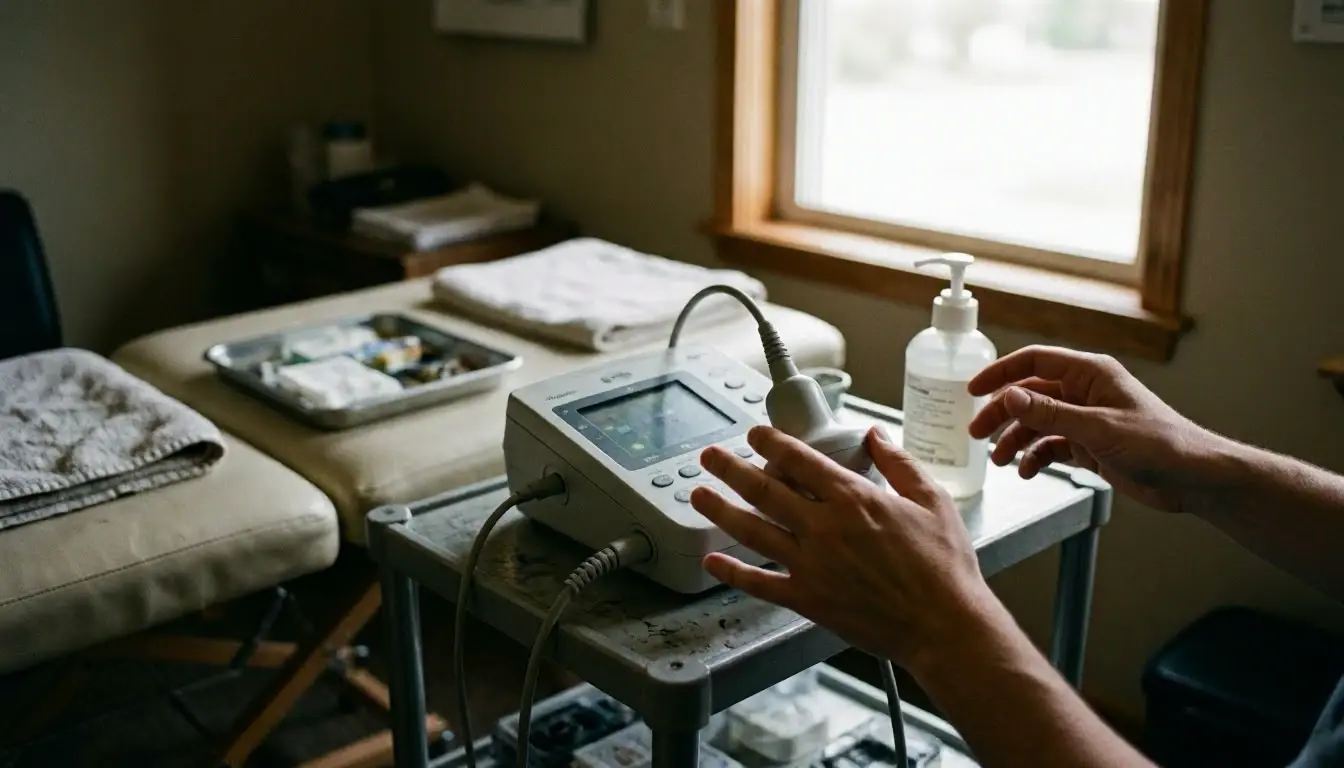
Therapeutic Ultrasound in Chiropractor: Therapeutic Ultrasound is a non-invasive treatment method that uses high-frequency...

Therapeutic Ultrasound is a treatment tool used by chiropractors, physical therapists. And sports medicine professionals to help patients recover from injuries. It works by sending sound waves deep into the body’s soft tissues, such as muscles, tendons. And ligaments. These sound waves create vibrations that generate heat, which can help relax tight muscles, reduce swelling. And improve blood flow to the injured area. The process is painless and doesn't involve surgery, needles. Or medication.

Related glossary terms: Soft Tissue Therapy, Physical Rehabilitation, Decompression Therapy.

Unlike the ultrasound machines used in hospitals to take pictures of organs or babies, therapeutic ultrasound is not used for imaging. Instead, it focuses on healing. The sound waves are delivered through a handheld device called a transducer, which is moved over the skin in slow, circular motions. A special gel is applied to the skin to help the sound waves travel smoothly into the body. Most treatment sessions last between 5 and 10 minutes, depending on the size of the area being treated.

How Therapeutic Ultrasound Works?

The science behind therapeutic ultrasound involves two main effects: thermal and non-thermal. The thermal effect occurs when the sound waves create friction within the tissues, producing heat. This heat can increase blood flow, relax muscles. And reduce stiffness. For many customers, that is the difference. The non-thermal effect, also called cavitation, involves tiny bubbles forming and vibrating within the tissues. These vibrations help break down scar tissue and promote cell repair, which can speed up healing.

Therapeutic ultrasound is typically set to frequencies between 1 and 3 megahertz (MHz). Lower frequencies, like 1 MHz, penetrate deeper into the body and are used for larger muscles or joints. Higher frequencies, like 3 MHz, are absorbed more superficially and are better for treating smaller, closer-to-the-surface injuries, such as tendonitis in the wrist or ankle. The intensity of the ultrasound can also be adjusted, usually measured in watts per square centimeter (W/cm²). Most treatments use intensities between 0.5 and 2.0 W/cm², depending on the patient’s needs and tolerance.

Why Therapeutic Ultrasound Matters?

How Therapeutic Ultrasound applies to Chiropractor services in Riverdale, United States—practical illustration

Therapeutic ultrasound matters because it offers a safe, drug-free way to help patients recover from injuries without surgery. Many people experience pain, swelling. Or stiffness after an injury. And these symptoms can make it difficult to move or perform daily activities. Therapeutic ultrasound can help reduce these symptoms by improving circulation and relaxing tight muscles. This can lead to faster healing and a quicker return to normal activities, whether that means playing sports, working. Or simply moving without pain.

Another important benefit of therapeutic ultrasound is its ability to break down scar tissue. Scar tissue can form after an injury and may limit movement or cause ongoing pain. The vibrations from ultrasound can help soften and break apart this scar tissue, improving flexibility and reducing discomfort. This makes it a valuable tool for patients recovering from surgeries, sprains. Or chronic conditions like tendonitis.

When Therapeutic Ultrasound Matters Most?

Therapeutic ultrasound is most helpful in situations where soft tissue injuries cause pain, swelling. Or limited movement. Common conditions treated with ultrasound include muscle strains, ligament sprains, tendonitis, bursitis. And plantar fasciitis. It's also used for patients recovering from surgeries, such as joint repairs or ligament reconstructions, to help reduce scar tissue and improve mobility. Athletes often use therapeutic ultrasound to speed up recovery from sports-related injuries, allowing them to return to training or competition sooner.

Therapeutic ultrasound is not suitable for everyone. It should not be used on areas with open wounds, infections. Or tumors. It is also not recommended for patients with certain medical devices, such as pacemakers. Or for pregnant women, especially over the abdomen. Chiropractors and other healthcare providers will evaluate each patient’s condition to determine if therapeutic ultrasound is an appropriate treatment option. When used correctly, it can be a valuable part of a full rehabilitation plan.


How to Evaluate Therapeutic Ultrasound?

Related Concepts Compared

Therapeutic Ultrasound vs. Diagnostic Ultrasound

Diagnostic ultrasound creates images of internal organs. While therapeutic ultrasound focuses on healing soft tissues with sound waves.

Therapeutic Ultrasound vs. Electrotherapy

Electrotherapy uses electrical currents to stimulate muscles. While therapeutic ultrasound uses sound waves to generate heat and promote healing.

Therapeutic Ultrasound vs. Ice or Heat Therapy

Ice or heat therapy applies temperature directly to the skin. While therapeutic ultrasound generates heat deep within tissues using sound waves.

Expert Note

Therapeutic ultrasound is most effective when combined with other treatments, such as stretching, strengthening exercises. Or manual therapy. It should not be used as a standalone solution but as part of a broader rehabilitation plan.

Common Mistakes or Myths About Therapeutic Ultrasound

  • Assuming therapeutic ultrasound is the same as imaging ultrasound.
  • Using ultrasound on open wounds or infected areas, which can worsen the condition.
  • Expecting immediate results after just one session; healing takes time and multiple treatments.
  • Believing ultrasound alone can fix an injury without other therapies like exercise or rest.

Therapeutic Ultrasound in Practice: A Real-World Example

A runner with Achilles tendonitis visits a chiropractor for treatment. The chiropractor uses therapeutic ultrasound on the injured tendon for 8 minutes, moving the transducer in slow circles. After several sessions, the runner notices reduced pain and improved flexibility, allowing them to return to running gradually.

Sources & Further Reading on Therapeutic Ultrasound

Related Services

Related Terms

Soft Tissue Therapy

Soft Tissue Therapy is a hands-on treatment that targets muscles, tendons, ligaments. And fascia to reduce pain, improve mobility. And speed healing. Soft Tissue Therapy techniques include massage, stretching. And pressure to break up scar tissue, release tension. And restore normal function without surgery or medication.

Physical Rehabilitation

Physical Rehabilitation is a structured process that helps individuals regain strength, mobility. And function after injury, surgery. Or illness. It combines exercises, manual therapy. And education to reduce pain, restore movement. And prevent further health problems. Physical Rehabilitation is often guided by healthcare professionals like chiropractors, physical therapists.

Decompression Therapy

Decompression Therapy is a non-surgical, traction-based treatment designed to relieve pressure on the spine and intervertebral discs. It involves gently stretching the spine using a motorized table or device to create negative pressure within the discs, promoting retraction of herniated or bulging disc material and improving nutrient flow to the affected area.

Trigger Point Therapy

Trigger Point Therapy is a manual treatment method that targets tight knots in muscles, called trigger points, which cause pain and stiffness. A trained provider applies focused pressure to these points to release tension, improve blood flow. And restore normal muscle function. This therapy is often used to relieve chronic pain, headaches.

ChiropractorRiverdale.link

Have Questions About Therapeutic Ultrasound?

Contact ChiropractorRiverdale.link for practical guidance on Therapeutic Ultrasound and related chiropractor work in Riverdale.

+1 678-605-9917