Understanding Decompression Therapy
Decompression Therapy helps your spine. It eases pain from pressure on nerves or discs.
Related glossary terms: Herniated Disc, Sciatica, Chiropractic Adjustment.
It's not like regular traction. That pulls your spine all the time.
Decompression uses a computer to stretch and relax your spine. It does this in cycles.
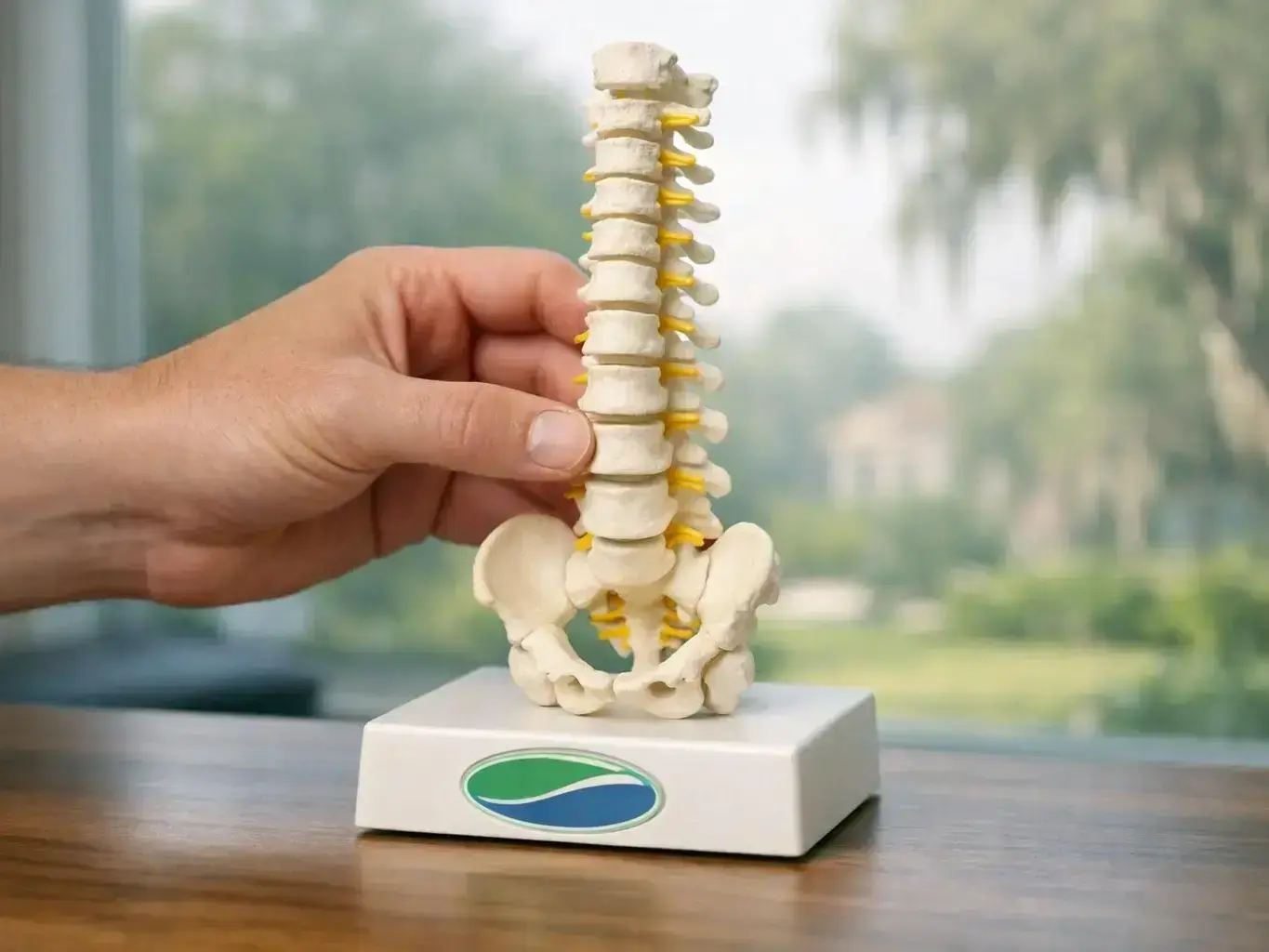
This makes a vacuum inside your discs. It can pull back herniated (bulging) disc material.
That helps nerves nearby. The treatment doesn't need surgery or shots.
People use it for herniated discs. It helps with sciatica (leg pain) too.
It works for degenerative disc disease (worn-out discs). It eases back and neck pain.
The goal is to stop numbness or tingling. It can help sharp pain that shoots down arms or legs.
It's not a cure. But it can help many people move better.
You get it at a clinic. A chiropractor (spine doctor) usually does it.
It's often part of a bigger plan. That may include adjustments, therapy. Or exercise.
How Decompression Therapy Works?
Decompression Therapy gently stretches your spine. This creates negative pressure in your discs.
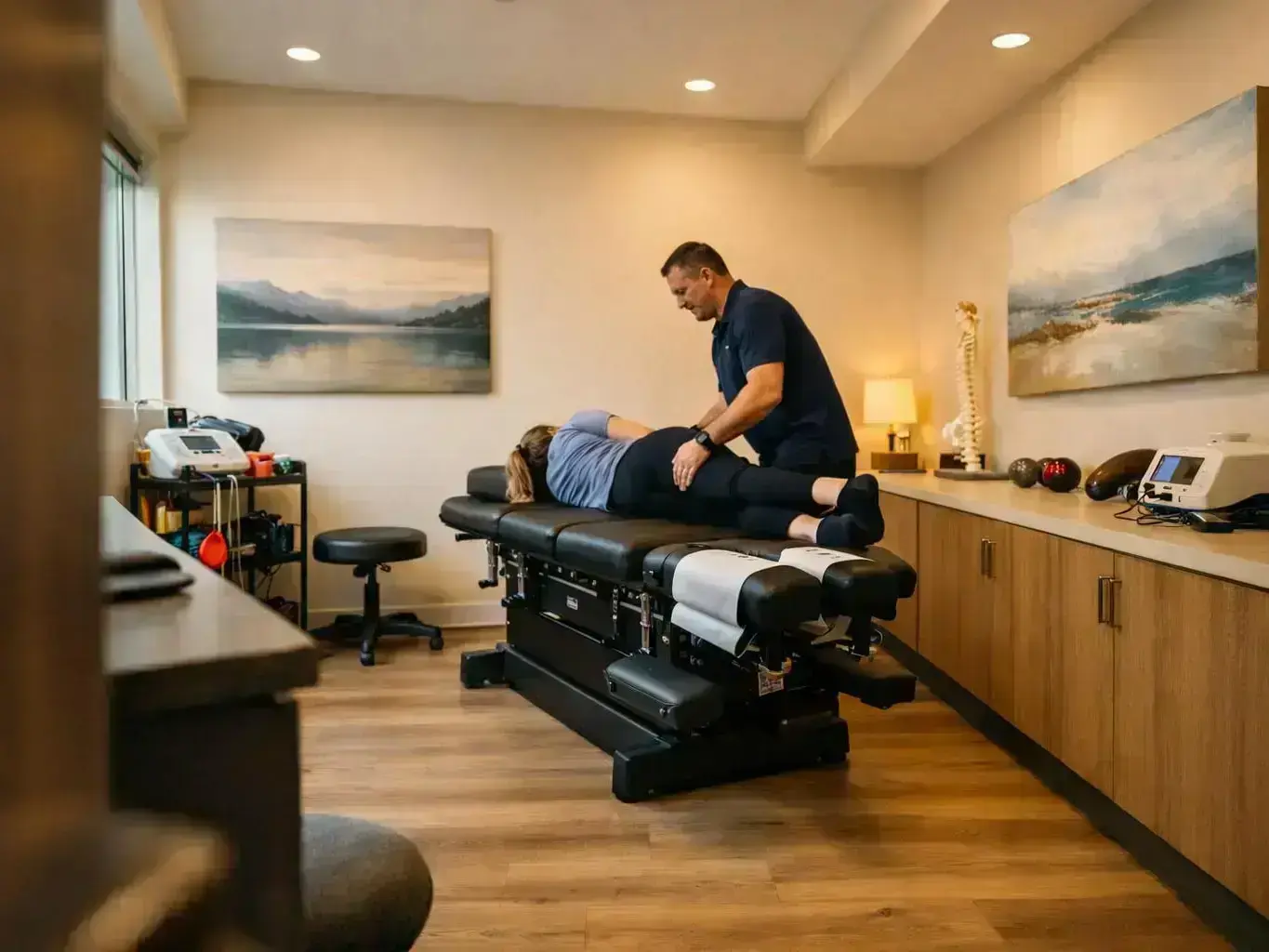
You lie on a special table. You face up or down, depending on what hurts.
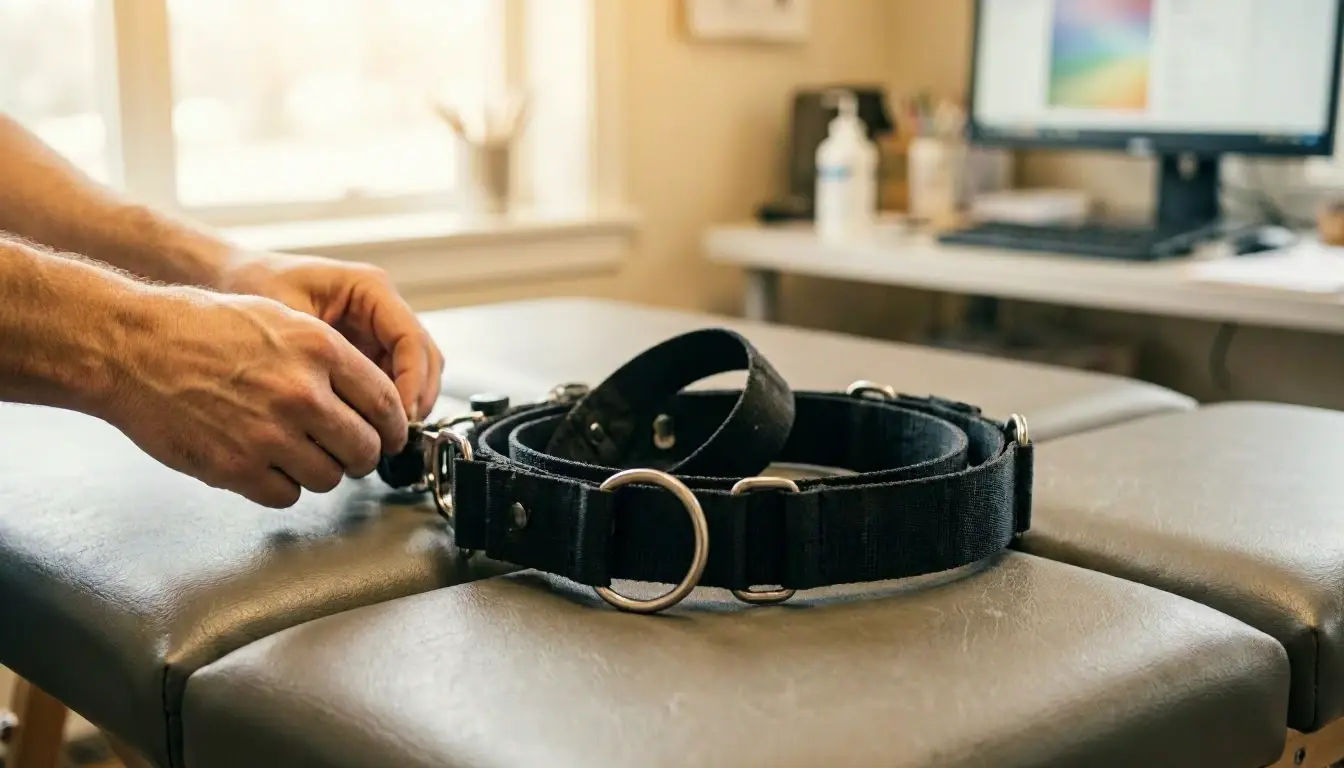
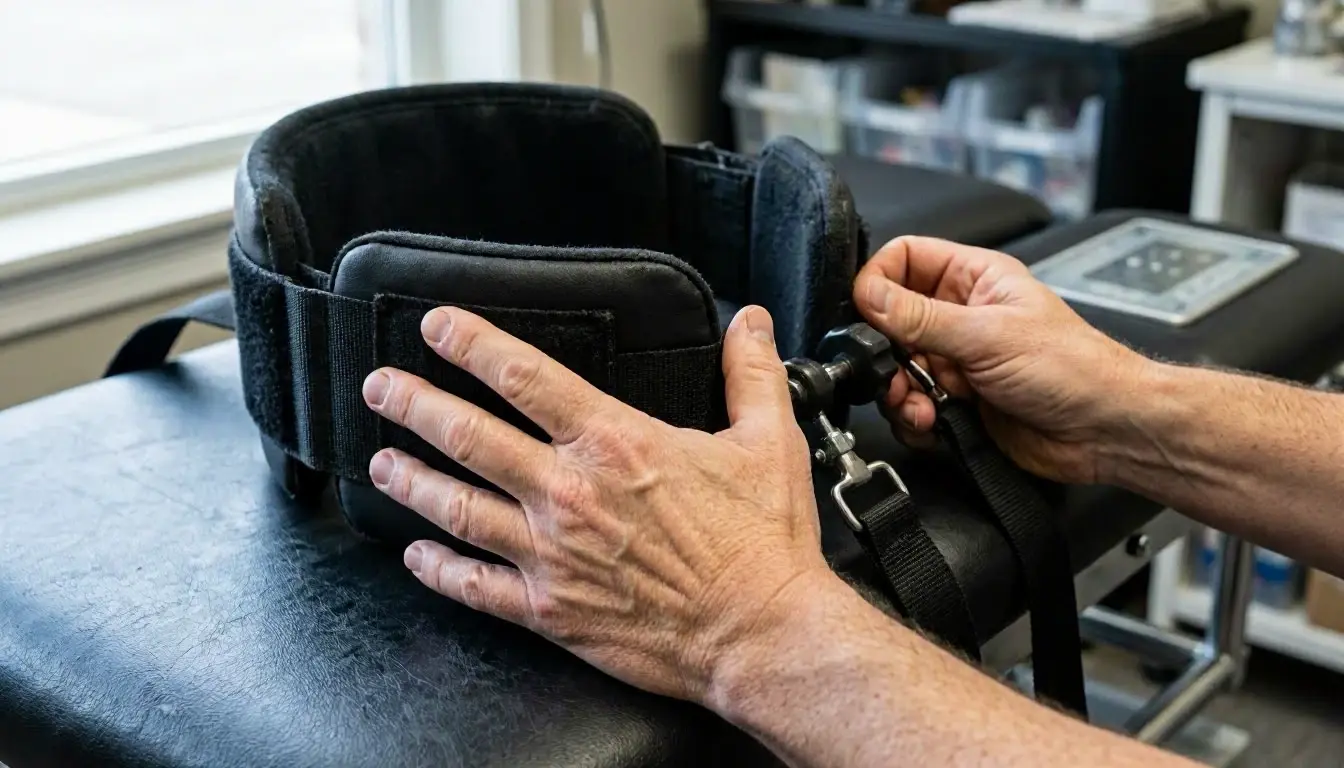
A harness goes around your hips or chest. The table moves to pull your spine.
This pull is careful. It won't cause muscle spasms or hurt you.
It goes back and forth. It stretches, then relaxes.
The negative pressure pulls in oxygen. It also pulls in water and nutrients.
This helps your discs heal. It reduces swelling too.
It's great for dry or damaged discs. For herniated discs, it pulls the bulge back.
That takes pressure off pinched nerves. Each session lasts 20 to 45 minutes.
You may need 15 to 30 sessions. That depends on how you feel.
Decompression works best with other treatments. Adjustments can line up your spine.
Exercises make your back muscles stronger. Heat or ice can ease pain.
Other tools may help too. These include electrical stimulation (tiny shocks) or ultrasound (sound waves).
Together, they help your spine. They treat the pain and what causes it.
Why Decompression Therapy Matters?
Decompression Therapy helps without surgery. It's for long-term spine pain and disc problems.
Many people with herniated discs have few choices. They use pain pills, shots. Or surgery.
Pills can cause side effects. They only hide the pain.
Surgery has risks. It takes a long time to heal.
Decompression targets the real problem. That's pressure on your spine.
It can make life better. It helps people with constant pain.
Back or neck pain can stop you from daily tasks. It can hurt your mood too.
Decompression eases pain. It helps you move better.
You can get back to normal. Most people handle it well.
It has few side effects. It's good for people who can't have surgery.
When Decompression Therapy Matters Most?
Decompression helps most with long-term back or neck pain. It's for pain that won't go away.
Rest, therapy. Or pills didn't help. It's good for herniated or bulging discs.
It helps sciatica (leg pain) and spinal stenosis (narrow spine). These pinch nerves.
Some people want to avoid surgery. They try decompression first.
It works best with other care. That includes adjustments, exercise. And changes to daily life.
Not everyone can use decompression. People with broken bones can't have it.
Those with tumors or bad osteoporosis (weak bones) can't either. People with spine infections shouldn't use it.
Pregnant women shouldn't try it. Neither should people with metal in their spine.
A chiropractor or spine doctor can check if it's safe. They look at your health and tests.
If it's right for you, it can ease pain. It can help your spine stay healthy.