
What Is Spinal Stenosis?
Spinal Stenosis is a narrowing of the spaces within the spine that can reduce room for the spinal cord or nerve roots. The narrowing may develop in the neck or lower back as discs, joints, or bone change. Symptoms can include pain, numbness, tingling, weakness, or discomfort that changes with movement.
Quick Facts About Spinal Stenosis
Category
Spinal condition
Used for
Understanding nerve space and related symptoms
Common confusion
Not every disc problem is spinal stenosis
Also called
Narrowing Of The Spine, Spinal canal stenosis
Often discussed with
Spinal Decompression Therapy
Key Takeaways About Spinal Stenosis
- Narrowed spinal spaces distinguish stenosis from general back pain.
- Symptoms may change with posture, walking, or spinal movement.
- Spinal stenosis is not the same as a herniated disc.
How Spinal Stenosis Works
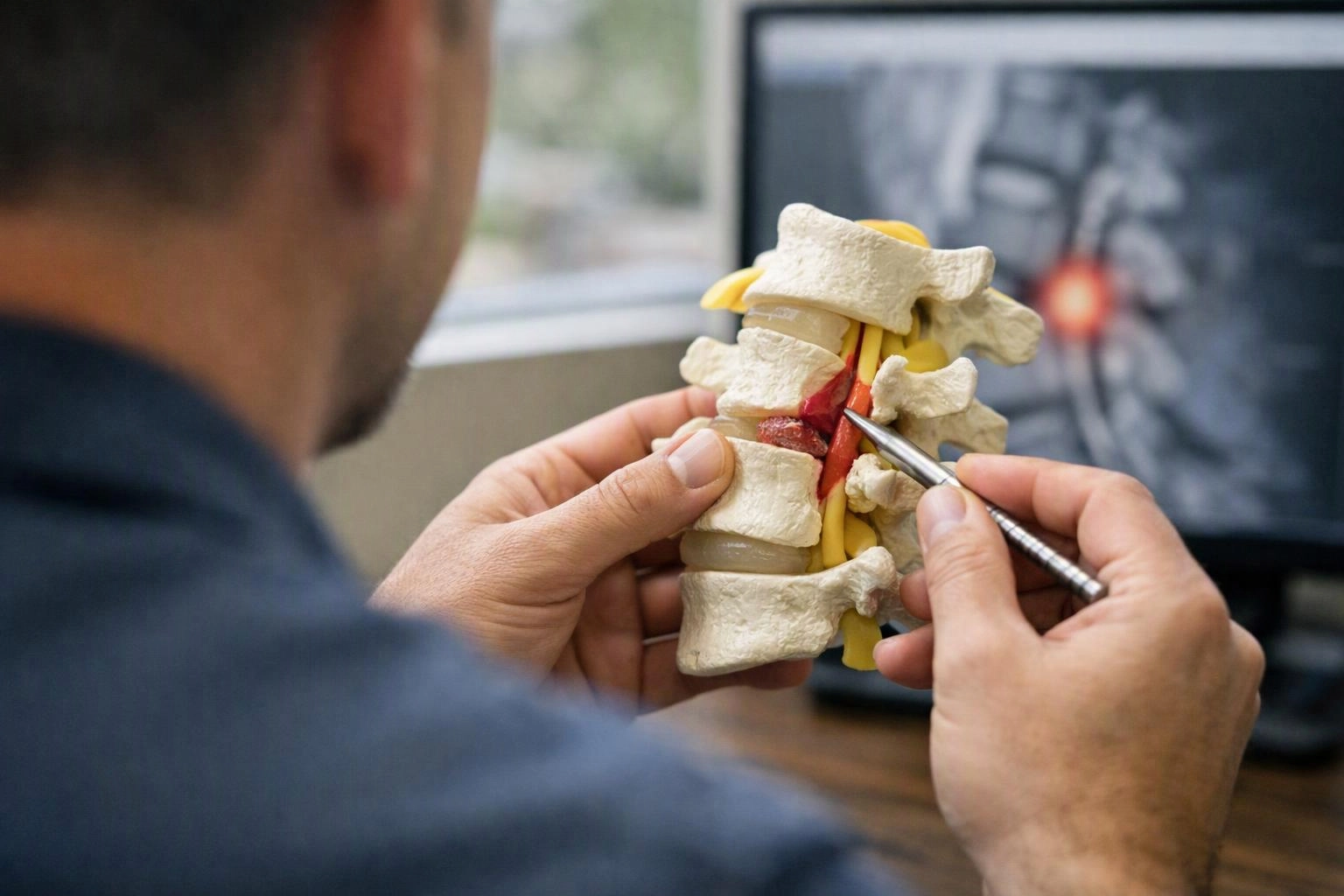
Spinal stenosis develops when the space inside the spinal canal or openings near the nerve roots becomes smaller. Disc changes, joint changes, and bone growth can each contribute to reduced space. The location of the narrowing helps determine which nerves may be affected.
Related glossary terms: Nerve Compression, Nerve Root, Lumbar Spine.
The lower back and neck are common areas for this condition. Nerve irritation may produce symptoms that travel into an arm or leg, while narrowing in the lower back may affect standing or walking comfort. Nerve compression describes pressure on a nerve, while stenosis describes the reduced space that can create that pressure. A lumbar spine evaluation focuses on the lower back, leg symptoms, posture, and movement patterns.
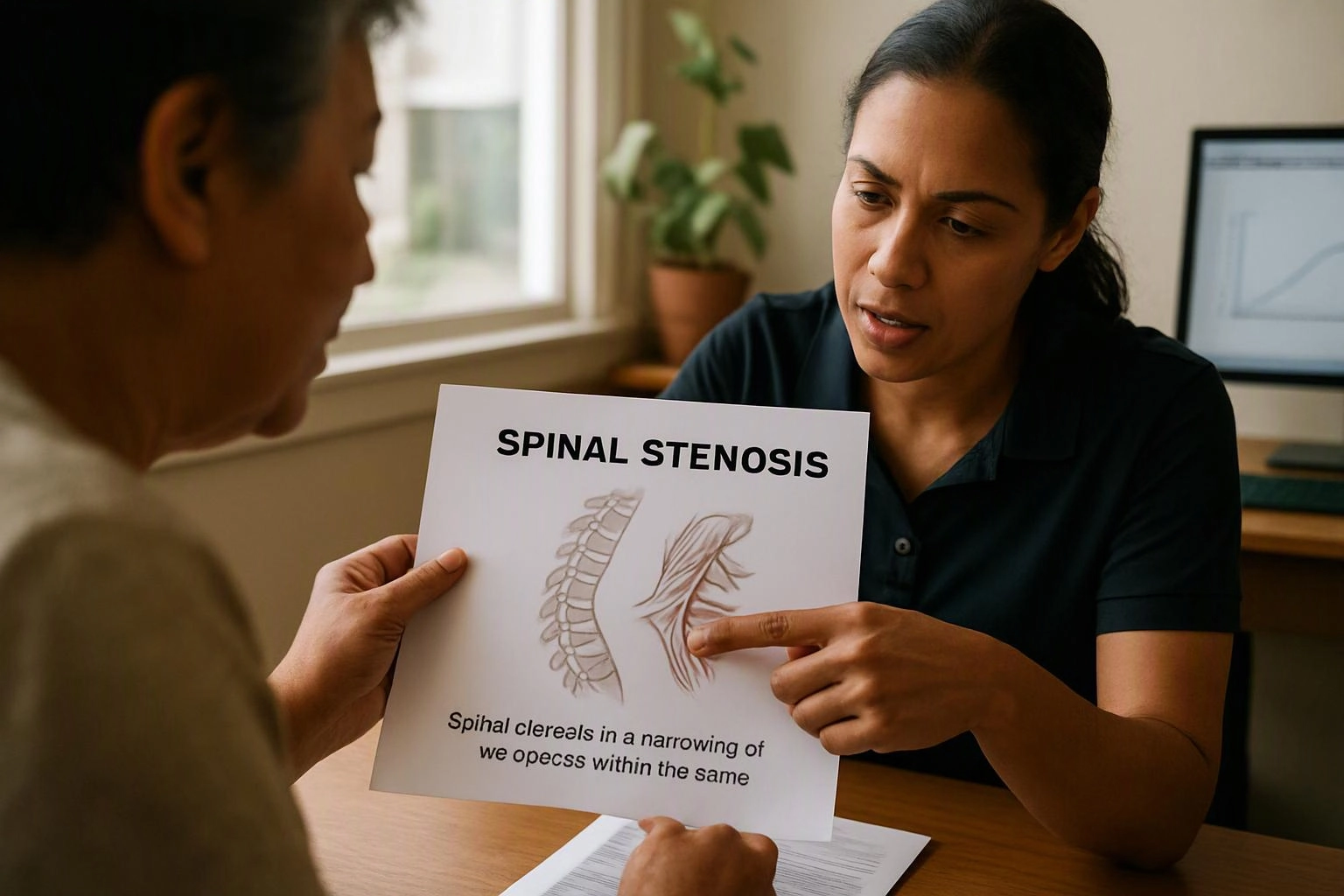
From the Arrowhead Clinic Chiropractor Riverdale team
When we assess Spinal Stenosis, we review reported symptoms, posture, range of motion, and movement patterns. We consider whether symptoms change with position or activity. Our team uses those findings to guide Spinal Decompression Therapy and identify situations that need evaluation beyond conservative care.
Spinal Stenosis in Practice: A Real-World Example
A person with lower-back Spinal Stenosis may notice leg discomfort or tingling after standing. During Spinal Decompression Therapy planning, the practitioner considers symptom patterns, movement tolerance, and the lumbar spine before selecting an approach.
Related Services
Related Terms
Nerve Compression
Nerve Compression is a condition in which pressure or irritation affects a nerve or nerve root…
Nerve Root
A nerve root is a bundle of nerve fibers that leaves the spinal cord through an…
Lumbar Spine
Lumbar Spine is the lower section of the spinal column between the thoracic spine and the…
Cervical Spine
A cervical spine is the neck portion of the spinal column, located between the skull and…
Arrowhead Clinic Chiropractor Riverdale
Have Questions About Spinal Stenosis?
Contact Arrowhead Clinic Chiropractor Riverdale for practical guidance on Spinal Stenosis and related chiropractor work in Riverdale.